
Cala Figuera
Santanyí · Mallorca
 Weather in Santanyí
 The beach
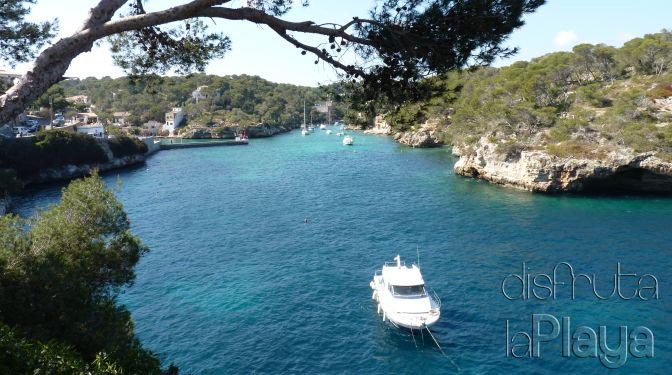
Cala Figuera is a harbour consists of two torrents: Caló d'en Boira and Caló d'en Busques. The port has a peculiar shape being the mouth of streams the mooring area. On the south side lies the village of Cala Figuera.
Notes
The most peculiar of this place is not the bathroom area, improvised artificial site, the most interesting place are the old fishermen's cottages well maintained.Many visitors come to visit Caló d'en Boira and Caló d'en Busques.
Restaurants
- Restaurante Pizzería El Port · Pastas y pizzas · 971165140
- Restaurante l'Arcada · 971645032
Video
 What this beach has
 Photos of Cala Figuera
How to get there
- 1From Santanyí
Leave Santanyí driving along Ma 6102 road.
- 2Left diversion
There will be a moment in which Ma 6102 road will be divided between Cala Santanyí and Cala Figuera. Take the way on the left.
- 3Carrer de Tramuntana
Just at the first crossing of village we will see a narrow path on the left with the name Carrer de Tramuntana.
- 4Parking
Continue on this road until you see a small park on the left, before the road turns. Here we can park and find some stone steps to the right. Just go down them a few meters to the left and reach the first stream, Calo d'en Busques.
Where it is
 Other beaches near Cala Figuera
About Santanyí
Santanyí is a Majorcan municipality that belongs to the Migjorn region. It borders on Ses Salines, Campos and Felanitx. It is famous for having very touristic coves such as Cala Mondragó and Cala d'Or as well as coastal urban nuclei like Portopetro, Cala d'Or or Cala Llombards. In Santanyí there is an important cheese and ice cream industry, most of them of artisan production. In Santanyí we can highlight its area for water sports in Portopetro, Cala Figuera and Cala d'Or or practising golf in the vicinity of Cala d'Or. The Mondragó nature reserve with its ecosystem variety can also be visited. Noteworthy in Santanyí is its cultural richness: being the most significant in architecture the 14th and 16th century Porta Murada, The Sant Andreu church from the 18th century and the remains of the talaiotic culture.
