
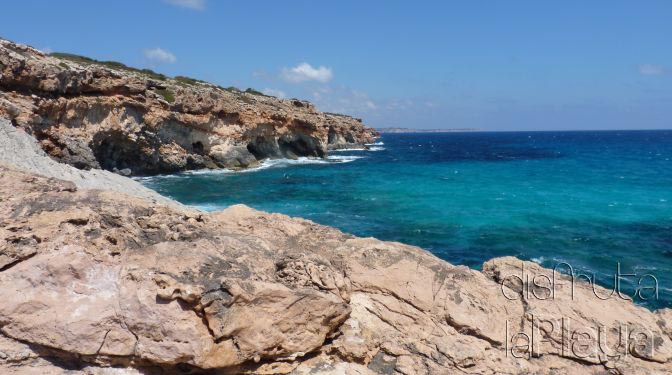
Torrent d´en Barracot
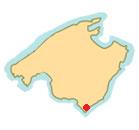
Santanyí · Mallorca
 Weather in Santanyí
 The beach
Torrent d'en Barracot is a rocky torrent near Ses Salines lighthouse, in Santanyí. You have to walk about 3 km. Bathing is only advisable when the sea is calm.
Notes
It is the estuary of a torrent. Only advisable if the trip to Caló des Màrmols is made. No signals to the cove/beach.
Restaurants
Nearby restaurants NO RESTAURANTS CLOSE TO THIS AREA
Video
 What this beach has
 Photos of Torrent d´en Barracot
How to get there
- 1From Santanyí
Leave Santanyí towards Ses Salines or Colònia de San Jordi driving along Ma 6100 road.
- 2Go past es Llombards
Follow the same road, Ma 6100 road, towards Ses Salines or Colònia de San Jordi going through Es llombards village.
- 3Ma 6110 Diversion
A bit after leaving es Llombards take the detour on the elft signaling Far des Cap de ses Salines. We can see at the entrance of this road a kilometre marker designated as 0.
- 4Reach SesSalines Lighthouse
If we go past the road in 2 km we will see a plant nursery on the right handside where we can make a U-turn. Once on the road leading to the lighthouse we must follow until the end. Park on the verge of the road.
- 5A path 3 km long
From the lighthouse continue walking along the coast towards the left approximately 3 km.
Where it is
 Other beaches near Torrent d´en Barracot
About Santanyí
Santanyí is a Majorcan municipality that belongs to the Migjorn region. It borders on Ses Salines, Campos and Felanitx. It is famous for having very touristic coves such as Cala Mondragó and Cala d'Or as well as coastal urban nuclei like Portopetro, Cala d'Or or Cala Llombards. In Santanyí there is an important cheese and ice cream industry, most of them of artisan production. In Santanyí we can highlight its area for water sports in Portopetro, Cala Figuera and Cala d'Or or practising golf in the vicinity of Cala d'Or. The Mondragó nature reserve with its ecosystem variety can also be visited. Noteworthy in Santanyí is its cultural richness: being the most significant in architecture the 14th and 16th century Porta Murada, The Sant Andreu church from the 18th century and the remains of the talaiotic culture.
