
Cala Salpella
Felanitx · Mallorca
 Weather in Felanitx
 The beach
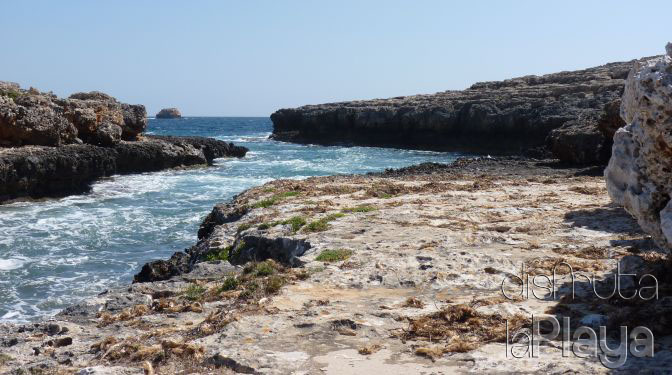
Cala Salpella or Cala Estreta is a small rocky cove situated between Cala Brafi and Cala Sa Nau in Felanitx. The cove has a sandy background and the rocky area is used like a solarium.
Length = m , Width = m .
Notes
Small, rocky and unfrequented cove accessible walking along the coast from Cala Brafi. In summer it has a small sandy area. Naturist place not accessible by boat.
Restaurants
Nearby restaurants NO RESTAURANTS CLOSE TO THIS AREA
Video
 What this beach has
 Photos of Cala Salpella
How to get there
- 1From Felanitx
Leave Felanitx driving along Llucmajor-Portocolom road (Ma 4010).
- 2Portocolom
When ariving at Portocolom we'll go through the first roundabout and we must take Marina street to join Ronda del Creuer Baleares street leaving it at Cala Marçal street.
- 3More streets in Portocolom
We will continue along Cala Marçal street up to Gavina street. Then we will join Fotja street until we reach a dead end in a triangule form roundabout.
- 4Park
Park the car at this triangular roundabout and we will have access to the cove through a local track. Continue straight along the dirt path until you see another path between two stone walls with a placard of Cala Brafi. After 150 meters we will arrive to the cove.
- 5Continue along the coast
Once in Cala Brafi we must continue along the coast to our right (or south). It is a simple way first some paths, then a rocky way to Cala Salpella. There are no indications on the way.
Where it is
 Other beaches near Cala Salpella
About Felanitx
Felanitx is a Majorcan municipality bordering on the coast with Santanyí and Manacor. Felanitx has got little coastline and its coves never cease to impress its visitors. Some of them are in urban areas and to reach them we must go through enabled pedestrian paths in private lands. Felanitx stands out for its wine and 'els cavallets' which is a popular dance since the beginning of the 17th century. It's composed by a group of children aged between 10 and 13. This dance is usually performed in the parish church or convent in the days of the patron Saint Margalida and in the feast of San Agustí.
