
Caló de sa Barca Trencada
Santanyí · Mallorca
 Weather in Santanyí
 The beach
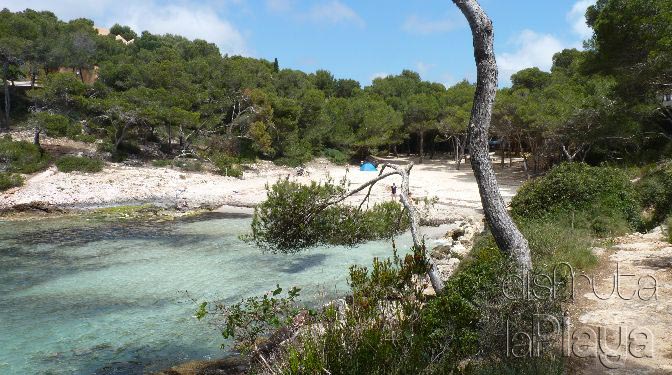
Caló de sa Barca Trencada is a nice beach in Santanyí where the pine trees predominate creating a shaded area recommended to share in family. There is an area of sand and rocks.
Notes
There are two restaurants, but they are those of the hotels. As a curiosity just mention that there is a dive shop.
Restaurants
- Chiringuito de la playa
Video
 What this beach has
 Photos of Caló de sa Barca Trencada
How to get there
- 1From Santanyí
Leave Santanyí driving along the road Palma-Portopetro
- 2Go past s'Alqueria Blanca
You have to go through s'Alquería Blanca nucleus and pass the village driving along the same road Palma-Portopetro until you reach a roundabout.
- 3Roundabout
At the roundabout we'll take the exit to the right up to a new roundabout.
- 4Second roundabout
At the second roundabout we'll take the exit on the right (paseo de Ponent street)
- 5LaTorre Avenue
We'll follow this street until we get to La Torre Avenue and its intersection with Cala Barca Street.
- 6CalaBarca street to Sa Barca Trencada
We'll continue on Cala Barca street until we get to the hotels core. The cove, well marked, is among the hotels with easy access and car park.
Where it is
 Other beaches near Caló de sa Barca Trencada
About Santanyí
Santanyí is a Majorcan municipality that belongs to the Migjorn region. It borders on Ses Salines, Campos and Felanitx. It is famous for having very touristic coves such as Cala Mondragó and Cala d'Or as well as coastal urban nuclei like Portopetro, Cala d'Or or Cala Llombards. In Santanyí there is an important cheese and ice cream industry, most of them of artisan production. In Santanyí we can highlight its area for water sports in Portopetro, Cala Figuera and Cala d'Or or practising golf in the vicinity of Cala d'Or. The Mondragó nature reserve with its ecosystem variety can also be visited. Noteworthy in Santanyí is its cultural richness: being the most significant in architecture the 14th and 16th century Porta Murada, The Sant Andreu church from the 18th century and the remains of the talaiotic culture.
