
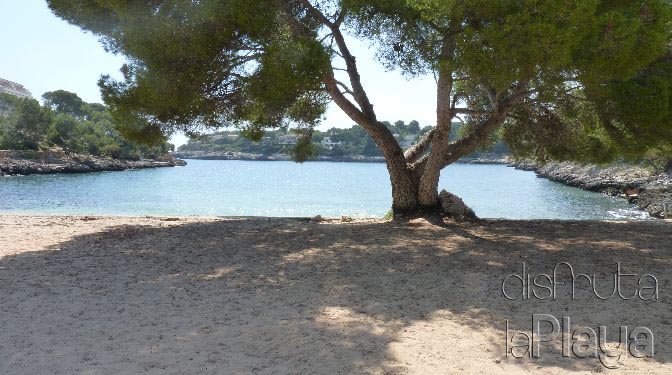
Caló des Homos Morts
Santanyí · Mallorca
 Weather in Santanyí
 The beach
Caló dels Homes Morts is a sandy and rocky beach in Santanyí. There is a sand area and another one bigger of rocks and abundant vegetation.
Notes
To reach the cove you have to go first to Caló de sa Torre and then go walking along a path between the coast and the hotels.
Restaurants
Nearby restaurants NO RESTAURANTS CLOSE TO THIS AREA
Video
 What this beach has
 Photos of Caló des Homos Morts
How to get there
- 1From Santanyí
Leave Santanyí driving along Palma-Portopetroroad.
- 2Go past s'Alqueria Blanca
Leave s'Alqueria Blanca village behind and follow along the same Palma-Portopetro road.
- 3First roundabout
We'll reach a roundabout and we'll take the exit on the right.
- 4Second roundabout
We'll reach a second roundabout, we'll take again the exit on the right (paseo de Ponent street) and we will see already marked el Caló de la Torre (follow this sign)
- 5La Torre Avenue
We'll get to La Torre Avenue and its intersection with san 148 street. Here we can park.
- 6Leave Caló de sa Torre behind
Reach Caló de sa Torre on foot and follow the path between the coast and the hotels up to el Caló dels homes morts.
Where it is
 Other beaches near Caló des Homos Morts
About Santanyí
Santanyí is a Majorcan municipality that belongs to the Migjorn region. It borders on Ses Salines, Campos and Felanitx. It is famous for having very touristic coves such as Cala Mondragó and Cala d'Or as well as coastal urban nuclei like Portopetro, Cala d'Or or Cala Llombards. In Santanyí there is an important cheese and ice cream industry, most of them of artisan production. In Santanyí we can highlight its area for water sports in Portopetro, Cala Figuera and Cala d'Or or practising golf in the vicinity of Cala d'Or. The Mondragó nature reserve with its ecosystem variety can also be visited. Noteworthy in Santanyí is its cultural richness: being the most significant in architecture the 14th and 16th century Porta Murada, The Sant Andreu church from the 18th century and the remains of the talaiotic culture.
